
There’s a particular silence that hits an office—or a Slack channel—when someone vital is out for the day. It feels awkward, maybe even a little heavy, as work just sits there waiting. We often dismiss these situations as typical, minor inconveniences of our daily operational flow.
Yet, the deeper implications of these moments deserve a far closer look.
Think about Sarah, the only person who knows how to run the monthly audit. It’s Tuesday, and she’s out with a fever. The payroll files are locked. The deadline for sending documentation for that VIP client is in four hours. The rest of the team is just… watching the clock, stuck. That’s not just a scheduling problem. It’s a crack in your work system that could have been easily patched.

Then there’s the painful ritual of onboarding. We watch Peter, the new hire, spend his first week acting like a private investigator. They’re constantly pinging people: "Where’s the presentation?" "Can I get the logo file?" "Who has the project timeline?" By the time they actually sit down to produce something, they’ve already burned through everyone else’s focus. Most people think they're being helpful by answering, but really, they are just institutionalizing the wrong way to share information.
And let’s be honest about the "Final_Final_v2" nightmare. We have all lived it. A spreadsheet gets passed around as an email attachment. Someone adds a column here, deletes a row there. By Friday, the data is a mess, and nobody knows which version is the real one. It’s a slow-motion disaster that ends with you sending the wrong data to a client, which is the fastest way to lose their trust.
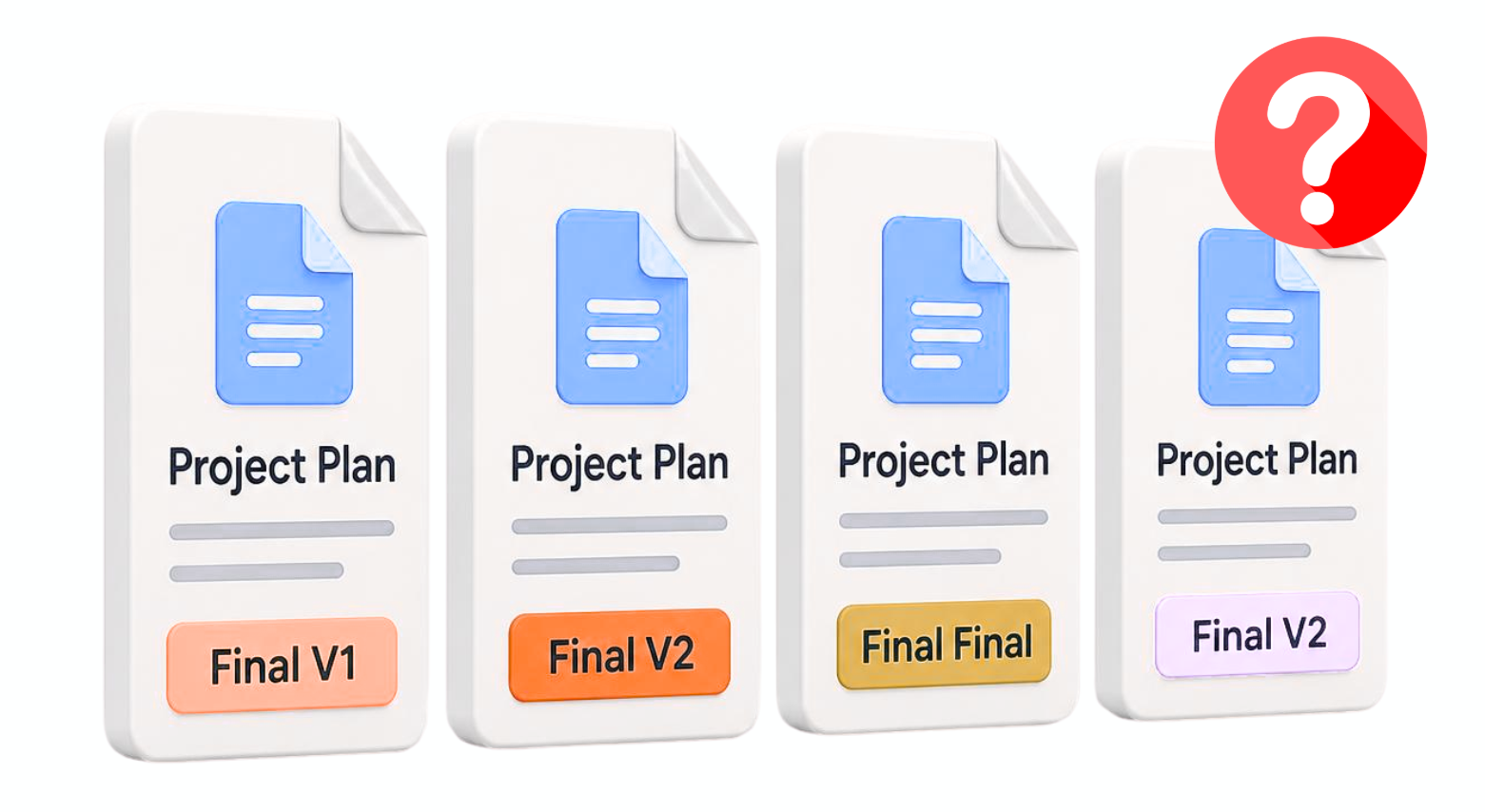
Sometimes chasing updated project deadlines and finding the "last approved" set of changes across multiple channels becomes frustrating. Imagine your team picks up a key initiative after a two-week break. Suddenly, nobody remembers why a specific feature was deprioritized or who actually gave the green light on that big design change. David, the project manager, finds himself digging through old emails and buried chats to verify if the timeline he is looking at or the design specs he found are actually the approved versions.
To solve all these challenges, InfoBox completely redefines how teams collaborate. Rather than resigning ourselves to these daily bottlenecks, we can fundamentally change how we work. Instead of watching information vanish into silos or get lost in endless email threads, InfoBox acts as a central system for your team’s knowledge. It gently takes the expertise stored in individual heads and organizes it into content that's easy to access.
It’s not just about drafting a formal document that no one reads; it’s about speaking the same language, clearly and consistently. Imagine a reality where the truth—the real, current, up-to-date version—is always just one click away. You stop asking and searching, interrupting your colleagues for simple answers, and you start focusing on the actual work that matters. When knowledge is no longer a privilege of the few but a resource for the many, the whole team finds a rhythm that’s not just faster, but genuinely sustainable.

%20(1).svg)
.png)

.png)